In the competitive landscape of Pennsylvania construction and logistics, choosing the correct equipment is the difference between a profitable project and a logistical nightmare. The debate of End Dump vs Hopper Trucks is a central one for contractors moving massive volumes of limestone, gravel, and sand. Pennsylvania’s unique combination of steep mountain grades, narrow rural roads, and dense urban corridors like the I-95 beltway requires a nuanced understanding of how these two vehicle types perform under pressure.
This guide provides a comprehensive technical and operational breakdown of End Dump vs Hopper Trucks, tailored specifically for the Pennsylvania market in 2026. By evaluating payload capacity, safety protocols, and site-specific limitations, you can ensure your fleet selection optimizes every ton moved from the quarry to the job site.
The Fundamental Engineering of Bulk Transport
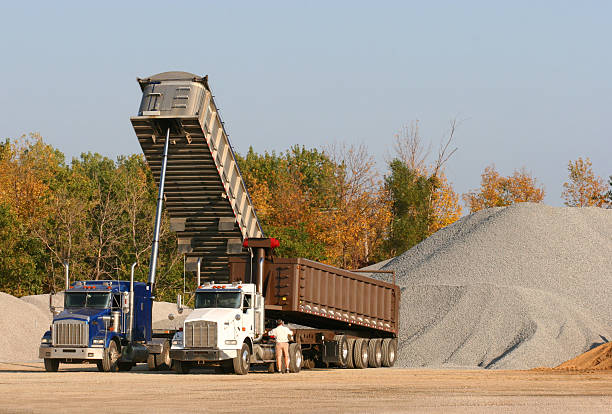
The core distinction in the End Dump and Hopper Trucks comparison lies in how the material exits the vehicle. An end dump truck utilizes a hydraulic lift to raise the front of the trailer, allowing gravity to pull the material out of the rear tailgate. In contrast, a hopper truck (also known as a bottom dump or grain trailer) features a funnel-shaped floor with gates at the base that release the material directly underneath the trailer.
Understanding these mechanical differences is vital because they dictate the types of environments where each truck can operate. In Pennsylvania, where overhead power lines and uneven ground are common, the “lift” of an end dump can be a liability, whereas the “bottom release” of a hopper requires specific ground clearance that may not be available on every undeveloped site.
Evaluating Payload Capacity and Weight Distribution
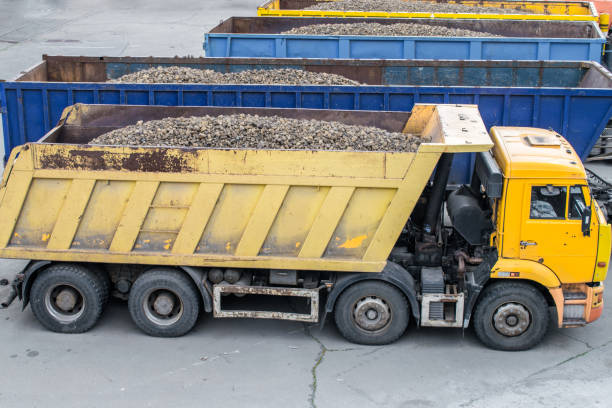
When comparing End Dump vs Hopper Trucks, payload is the primary driver of ROI. In Pennsylvania, PennDOT strictly enforces bridge weight limits and gross vehicle weight (GVW) ratings. Generally, hopper trucks are lighter in their construction because they lack the heavy hydraulic cylinders and reinforced subframes required for tipping.
This weight advantage means that in the End Dump vs Hopper Trucks battle for tonnage, the hopper often wins by allowing for an extra 1,000 to 2,000 lbs of actual material per load. However, the weight distribution of an end dump is often more versatile for navigating the “soft” entrances of Pennsylvania farm roads or construction pads where concentrated weight can cause a vehicle to sink.
Site Accessibility and Maneuverability in PA
Pennsylvania’s geography is notoriously difficult for large articulated vehicles. When analyzing End Dump and Hopper Trucks for site access, the end dump typically offers superior maneuverability in tight quarters. Because end dumps can “jackknife” into position and dump their load in a concentrated pile, they are the preferred choice for residential driveways and urban utility repairs.
Hopper trucks, conversely, require a “pull-through” path. They are designed to release material while in motion, creating a long windrow of stone. If your site in the Lehigh Valley or Pittsburgh is a dead-end or lacks a clear exit path, the End Dump vs Hopper Trucks choice becomes simple: the end dump is the only viable option.
Safety Risks: Tipping vs. High-Center Hazards
Safety is a non-negotiable factor in the End Dump vs Hopper Trucks discussion. The most significant risk associated with end dumps is the potential for a tip-over. When the bed is fully extended into the air, the truck’s center of gravity is extremely high. If the ground is not perfectly level or if the material is “sticky” and slides out unevenly, the entire rig can roll over.
Hopper trucks eliminate the tip-over risk because the trailer remains grounded during the entire unloading process. However, the End Dump and Hopper Trucks safety profile for hoppers includes the risk of “high-centering.” If a hopper truck releases too much material too quickly, it can drive over its own pile and become stuck, requiring a tow or manual shoveling to clear the axles.
Efficiency in Material Spreading and Tailgating
For road-building projects across the Commonwealth, the ability to spread material efficiently is a major factor in the End Dump and Hopper Trucks comparison.
- Hopper Spreading: These trucks are the masters of the “windrow.” By opening the bottom gates to a specific width, they can lay a perfectly even line of stone as they drive forward.
- End Dump Tailgating: Skilled PA drivers can “crack the gate” and dump while moving, but it is rarely as precise as a hopper’s release.
- Labor Savings: Using a hopper often reduces the amount of time a grader or loader needs to spend leveling the material.
Analyzing Equipment Maintenance and Longevity
The maintenance schedules for End Dump vs Hopper Trucks differ significantly due to their moving parts. End dumps require constant inspection of the hydraulic system, including the pump, hoses, and the multi-stage cylinder. In the cold Pennsylvania winters, hydraulic fluid can thicken, and seals can fail, leading to downtime.
Hopper trucks have fewer hydraulic components but require maintenance on the gate tracks and the “cranking” mechanisms.
Material Versatility: Rocks vs. Fines
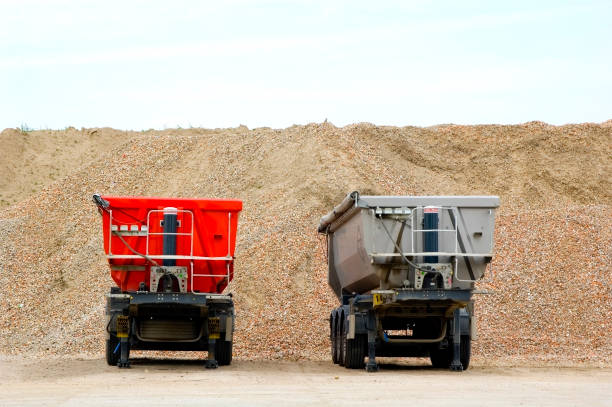
The physical properties of the aggregate will often dictate the End Dump vs Hopper Trucks selection. Not all materials flow through a hopper gate effectively.
| Material Type | End Dump Compatibility | Hopper Compatibility | Recommendation |
| Large Rip-Rap | Excellent | Poor (Will clog gates) | End Dump |
| #57 Limestone | Good | Excellent | Either |
| Masonry Sand | Good | Excellent | Hopper |
| Wet Topsoil | Good | Poor (Will bridge/stick) | End Dump |
If your Pennsylvania project involves moving “clean” stone or dry sand, the hopper is highly efficient. However, for “dirty” or large-diameter materials, the End Dump and Hopper Trucks choice must lean toward the end dump to prevent clogging.
Overhead Clearance and Urban Constraints
In cities like Philadelphia and Harrisburg, overhead obstacles are a constant threat. The End Dump vs Hopper Trucks comparison in urban environments highlights the hopper’s “low profile” advantage. An end dump bed can reach heights of 30 feet or more when fully extended, which is a lethal risk near power lines or under bridges.
Because a hopper truck never changes its vertical profile, it is the safer choice for work under Pennsylvania’s many low-clearance overpasses or in tunnels. When bidding on municipal contracts that involve work in high-density areas, the End Dump vs Hopper Trucks safety protocol often mandates the use of hoppers or “live bottom” trailers to eliminate overhead contact risks.
Impact of Pennsylvania Weather on Load Release
Pennsylvania’s “freeze-thaw” cycle is a major variable in the End Dump vs Hopper Trucks debate. During the winter, moisture in the aggregate can cause the material to freeze to the sides of the trailer.
Winter Operational Factors
- Frozen Loads: In an end dump, a frozen load might “hang” at the top of the bed, creating an immediate tip-over hazard.
- Gate Freezing: In a hopper, the bottom gates can freeze shut, requiring the driver to use a torch or de-icing agents to release the load.
- Liners: Many PA haulers use plastic bed liners in end dumps to help material slide, a feature less common in hoppers.
- Salt Hauling: During the winter, both trucks are used for road salt, but hoppers are often preferred for their precise spreading on highways.
Cost Comparison: Acquisition and Rental Rates
When looking at the End Dump vs Hopper Trucks financial commitment, purchase prices are relatively comparable, but rental and insurance rates can vary. End dumps often carry higher insurance premiums in Pennsylvania due to the statistically higher risk of tip-over accidents.
For a contractor looking to rent equipment for a short-term project in Central PA, the End Dump vs Hopper Trucks availability is also a factor. End dumps are more ubiquitous in the general construction market, whereas hopper trucks are often specialized for agricultural or large-scale road paving fleets.
Fuel Efficiency and Aerodynamics
In 2026, fuel surcharges are a major part of any hauling quote. The End Dump vs Hopper Trucks aerodynamic profile impacts these costs. Hopper trucks, particularly “grain-style” hoppers with smooth sides, tend to have less wind resistance than the ribbed sides of a heavy-duty steel end dump.
Over thousands of miles of travel on the PA Turnpike or I-80, the fuel savings of a hopper can add up. When calculating the End Dump vs Hopper Trucks long-term operational cost, the hopper’s lighter weight and better fuel economy often make it the more sustainable choice for long-haul aggregate transport.
Unloading Speed and Cycle Times
Cycle time is the lifeblood of End Dump vs Hopper Trucks efficiency. An end dump can pull into a site, dump its load in a single pile, and be back on the road in minutes. A hopper truck requires more time to “meter” the material out as it drives, and the driver may need to get out and manually ensure the gates are cleared of debris.
If the goal of your Pennsylvania project is to move as many loads as possible in an eight-hour shift (high-volume “shuttling”), the End Dump vs Hopper Trucks data usually favors the end dump for its raw speed at the dump site.
Driver Skill and Training Requirements
Operating these vehicles requires different skill sets. In the End Dump vs Hopper Trucks training manual, the end dump requires more focus on “site reading.” A driver must be able to judge the stability of the ground and the wind speed before raising the bed.
Hopper drivers need more skill in “speed coordination.” To lay an even windrow of limestone across a Pennsylvania road bed, the driver must perfectly coordinate their ground speed with the opening of the hopper gates. Both roles require a Class A CDL, but the End Dump vs Hopper Trucks risk management strategies they employ are distinct.
Comparing Durability: Steel vs. Aluminum
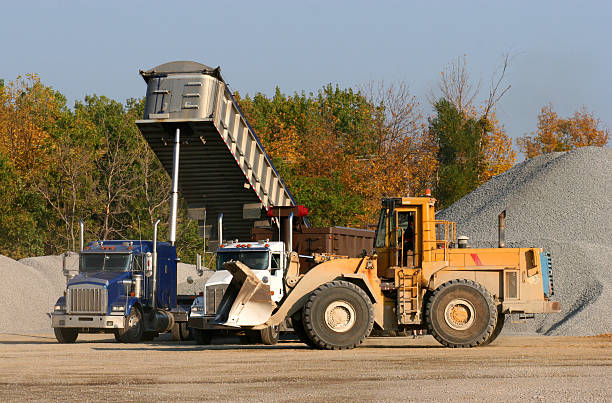
The construction material of the trailer is a sub-plot in the End Dump vs Hopper Trucks story. Most end dumps used in PA aggregate hauling are made of heavy-duty AR450 steel to handle the impact of large rocks. Hopper trucks are frequently made of aluminum to save weight.
Material Durability Points
- Impact Resistance: Steel end dumps can handle rip-rap and “shot rock” without denting.
- Corrosion: Aluminum hoppers resist the corrosive effects of Pennsylvania’s road salt better than non-coated steel.
- Repairability: Steel is generally easier and cheaper to weld and repair in local PA shops.
- Resale Value: Aluminum hoppers tend to hold their value longer in the secondary agricultural and aggregate markets.
Final Verdict: Which Truck Wins for PA?
Ultimately, the End Dump vs Hopper Trucks winner depends on the specific project. For highway construction where stone needs to be spread over miles, the hopper is the king of the road. For residential work, site prep, and moving large, heavy debris, the end dump remains the industry standard.
By understanding the strengths and weaknesses of End Dump vs Hopper Trucks, Pennsylvania contractors can build more accurate bids and ensure their material flow never stops. In the 2026 market, the most successful companies are those that maintain a mixed fleet, utilizing the precision of the hopper and the rugged versatility of the end dump.
Frequently Asked Questions (FAQs)
Which is better for wet limestone, an end dump or a hopper?
In the End Dump vs Hopper Trucks comparison for wet material, the end dump is superior. Wet limestone or sand can “bridge” in a hopper, meaning it gets stuck in the funnel and refuses to flow out of the gates.
Can hopper trucks be used for residential driveways?
It is difficult. Hopper trucks require a “pull-through” area. Most residential driveways in PA are not long enough or wide enough to accommodate the windrow dumping style of a hopper. For these jobs, the End Dump vs Hopper Trucks choice should always be the end dump.
Are end dump trucks more dangerous than hoppers?
Statistically, yes, due to the risk of tipping. However, with proper driver training and level ground, they are safe. The End Dump vs Hopper Trucks safety debate focuses on the fact that hoppers have a much lower center of gravity.
Why do hopper trucks have a higher payload?
Because they don’t have the heavy hydraulic rams and lifting subframes of an end dump, the trailer itself weighs less. In the End Dump vs Hopper Trucks weight battle, a lighter trailer means more room for actual aggregate within legal limits.
Do all PA quarries allow both types of trucks?
Most major Pennsylvania quarries are equipped to load both. However, when considering End Dump vs Hopper Trucks, check if the quarry uses overhead bins (perfect for hoppers) or front-end loaders (easier for end dumps).
[Request a Custom Quote for End Dump or Hopper Hauling in PA]