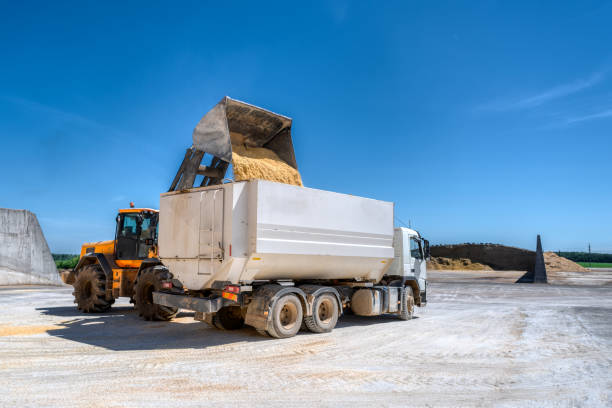
The Northeastern corner of Pennsylvania serves as a vital junction for the state’s construction and agricultural sectors. Known for its deep industrial roots, the Scranton and Wilkes-Barre region requires a robust logistics network to move raw materials from the earth and the field to their final destinations. Aggregate and Grain Transport Services provide the essential link between regional quarries, fertile farmland, and the growing urban infrastructure. In 2026, as the area experiences a resurgence in commercial development, the demand for high-capacity hauling remains at an all-time high.
Operating in the Wyoming Valley presents unique geographical and regulatory challenges. From navigating the steep climbs of the Moosic Mountains to managing weight limits on historic bridges, professional haulers must possess localized expertise. This guide examines the standards of excellence for Aggregate and Grain Transport Services in this specific Pennsylvania corridor.
The Economic Engine of Northeastern Pennsylvania
Scranton and Wilkes-Barre act as the primary hubs for a multi-county trade area. The movement of stone and agricultural products fuels the local economy by supporting both the building trades and the food supply chain. Reliable Aggregate and Grain Transport Services ensure that construction sites have a steady supply of gravel and that mills receive the corn and wheat needed for processing.
The proximity of I-81 and I-476 makes this region a strategic location for logistics companies. By positioning fleets near these major arteries, providers of Aggregate and Grain Transport Services can reach North Jersey or Southern New York in a matter of hours. This accessibility lowers transport costs for local producers and keeps the regional market competitive.
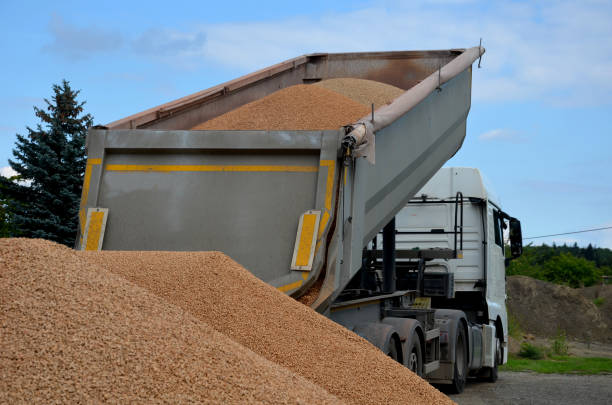
Understanding the Material Variety in the Wyoming Valley
The diversity of materials moved in this region requires a versatile approach to hauling. Quarries in Luzerne and Lackawanna counties produce a variety of stones, while local farms contribute significant yields of soybeans and corn.
| Material Category | Specific Examples | Primary Use Case |
| Construction Aggregates | Crushed Limestone, 2B Stone, Rip-Rap | Road beds, drainage, and foundations |
| Agricultural Grains | Corn, Soybeans, Winter Wheat | Animal feed and food processing |
| Industrial Sand | Play Sand, Masonry Sand | Concrete mixing and landscaping |
| Soil Products | Topsoil, Fill Dirt | Site grading and residential projects |
Top-tier Aggregate and Grain Transport Services understand that each of these materials has a different density. This knowledge allows dispatchers to calculate the exact tonnage for every load, ensuring the truck remains within legal weight limits while maximizing the customer’s value.
Specialized Equipment for Heavy Duty Hauling
You cannot move heavy rock in a trailer designed for light grain without risking structural damage. To provide comprehensive Aggregate and Grain Transport Services, companies maintain a fleet of varied trailer types.
- Steel End Dumps: These trailers feature reinforced walls to handle the impact of large rocks and demolition debris.
- Aluminum Hoppers: These are the gold standard for Aggregate and Grain Transport Services involving grain, as the lighter weight allows for a larger legal payload.
- Tri-Axle Dump Trucks: Ideal for residential deliveries and tight construction sites in downtown Scranton or Wilkes-Barre.
- Live Floor Trailers: These utilize a hydraulic slat system to unload mulch or light agricultural byproducts in areas with low overhead clearance.
Navigating the Terrain of the Moosic Mountains
The topography surrounding Scranton is famously rugged. Moving 80,000 pounds of material over the mountain passes requires a driver with exceptional skill and a well-maintained truck. Aggregate and Grain Transport Services in this region must account for steep grades that put extreme stress on engines and braking systems.
Drivers utilize engine brakes to maintain a safe speed during the long descents into the valley. Professional providers of Aggregate and Grain Transport Services train their operators specifically for these conditions. This localized training prevents “runaway” scenarios and ensures the safety of the driver and the motoring public.
Utilizing 511PA for Live Traffic and Road Conditions
Construction on the “Cross-Valley Expressway” and I-81 can create massive delays for heavy trucks. To ensure Aggregate and Grain Transport Services stay on schedule, dispatchers rely on the 511PA system. This real-time tool provides updates on commercial vehicle restrictions and accident scenes.
By monitoring 511PA, a driver can avoid a backup near the Wilkes-Barre/Scranton International Airport and find an alternative route through the valley. This responsiveness is a hallmark of high-quality Aggregate and Grain Transport Services. It allows for predictable delivery windows even when the region’s infrastructure is under repair.
The Importance of Posted and Bonded Roads
Many quarries and farms sit on secondary roads that the local township has “posted” with weight limits. To provide Aggregate and Grain Transport Services on these routes, the hauler must often secure a road bond. This is a financial guarantee that the hauling company will pay for any damage caused by their heavy equipment.
Key Aspects of Road Bonding
- Pre-Haul Inspection: The hauler and township officials document the road’s condition before the project begins.
- Maintenance Agreements: Some Aggregate and Grain Transport Services providers agree to perform minor repairs, like filling potholes, during the hauling period.
- Financial Security: The bond ensures the township has the funds to restore the road after a large-scale project concludes.
- Permit Management: Professional haulers handle the administrative burden of these permits for their clients.
Managing the Seasonal Spike in Grain Demand
Agricultural hauling operates on a strict natural clock. During the fall harvest, the demand for Aggregate and Grain Transport Services increases exponentially. Thousands of bushels of corn and soybeans must move from the field to the elevators in a very short window.
Reliable companies prepare for this surge by performing deep maintenance on their hopper fleets during the summer. By ensuring every trailer is in peak condition, Aggregate and Grain Transport Services can operate 24/7 during the harvest. This reliability prevents grain from spoiling in the field and ensures the farmer gets their product to market at the best possible price.
Compliance with PennDOT Weight and Safety Regulations
Pennsylvania state troopers frequently conduct inspections near the major industrial parks of Pittston and Hanover Township. Aggregate and Grain Transport Services must remain in total compliance with safety laws to avoid heavy fines and project delays.
| Regulation | Requirement | Verification Method |
| Gross Vehicle Weight | 80,000 lbs (Standard) | Certified scale tickets |
| Load Securement | 100% Tarping | Automated roll-tarp inspection |
| Driver Hours | ELD Compliance | Electronic Logging Device data |
| Equipment Safety | Annual DOT Inspection | Current inspection stickers on truck/trailer |
Leading providers of Aggregate and Grain Transport Services use on-board scales to verify weights at the loading site. This technology ensures the truck is legal before it ever touches a public highway.
Technical Standards for Food-Grade Grain Transport
When moving grain for human consumption or high-value animal feed, cleanliness is paramount. Aggregate and Grain Transport Services follow strict bio-security protocols to prevent cross-contamination. A trailer that previously carried stone or fertilizer must undergo a rigorous cleaning process before it can carry grain.
- Trailer Wash-Outs: Use high-pressure systems to remove all debris from previous loads.
- Sanitization Records: Drivers carry documentation proving the trailer is clean and food-safe.
- Moisture Control: Ensuring the hopper is completely dry to prevent mold growth in the grain.
- Seal Inspection: Checking the integrity of the tarp and the bottom gates to prevent pest entry.
These details distinguish professional Aggregate and Grain Transport Services from general freight haulers who may not understand the sensitivities of agricultural cargo.
Supporting Infrastructure Projects in Scranton
The city of Scranton is currently undergoing several major bridge and road rehabilitation projects. These sites require a constant flow of base stone and asphalt aggregates. Aggregate and Grain Transport Services coordinate with project managers to deliver materials in precise increments.
Because downtown Scranton has narrow streets and tight corners, dispatching the right equipment is vital. A tri-axle dump truck is often more effective than a full tractor-trailer for these urban deliveries. Professional Aggregate and Grain Transport Services evaluate the delivery site beforehand to ensure the equipment can maneuver safely without damaging curbs or overhead lines.
Digital Integration and e-Ticketing in 2026
The era of paper scale tickets is ending. In 2026, Aggregate and Grain Transport Services utilize e-Ticketing to provide instant documentation for every load. This digital system sends the weight and material type directly to the customer’s smartphone or office computer.
This transparency allows for real-time inventory management. A construction foreman can see exactly how many tons of stone have arrived on site without sorting through a stack of paper. By adopting these tools, Aggregate and Grain Transport Services reduce administrative errors and speed up the billing process for all parties involved.
Training Drivers for the Wilkes-Barre Urban Corridor
Wilkes-Barre features a mix of historic residential neighborhoods and modern industrial zones. Drivers providing Aggregate and Grain Transport Services must be highly skilled in defensive driving. They must navigate the heavy pedestrian traffic near King’s College and Wilkes University while managing a fully loaded rig.
Companies that prioritize Aggregate and Grain Transport Services invest in continuous safety training for their operators. This includes “Looking Up and Living” protocols to avoid overhead power lines during unloading and blind-spot awareness training. A safe driver is the most valuable asset in any logistics operation.
Environmental Sustainability in Bulk Logistics
Northeastern Pennsylvania’s natural beauty is a point of pride for residents. To protect the local environment, Aggregate and Grain Transport Services are adopting greener technologies. This includes aerodynamic trailer designs and low-emission diesel engines that meet 2026 standards.
By optimizing routes through GPS and telematics, Aggregate and Grain Transport Services reduce unnecessary idling and fuel consumption. Some fleets are also exploring the use of Renewable Natural Gas (RNG) for short-haul runs within the valley. These efforts help lower the carbon footprint of the local construction and farming industries.
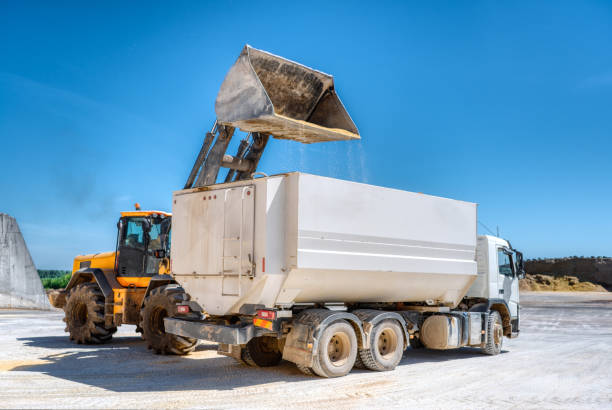
Handling the Logistics of Industrial Sand and Clay
Beyond standard stone and corn, the region requires the transport of specialized industrial materials. Aggregate and Grain Transport Services move masonry sand for brickwork and clay for landfill liners. These materials have unique moisture requirements and can be difficult to unload if they become too wet.
Professional haulers use waterproof tarps and specialized liners to ensure these materials flow smoothly from the trailer. Understanding the “angle of repose” for different sands is a technical skill that ensures Aggregate and Grain Transport Services can unload safely on uneven ground. This expertise prevents trailer tip-overs and ensures a clean discharge of the product.
Conclusion: Securing Your Transport Partner
Choosing a provider for Aggregate and Grain Transport Services in the Scranton and Wilkes-Barre region is a decision that affects your bottom line. Whether you are a farmer preparing for the harvest or a contractor bidding on a new highway project, you need a partner who understands the local landscape.
The best providers of Aggregate and Grain Transport Services offer a combination of modern equipment, technological integration, and deep geographic knowledge. By prioritizing safety and reliability, these haulers keep the Wyoming Valley moving forward. As the region continues to grow, the importance of high-quality Aggregate and Grain Transport Services will only increase, serving as the foundation for future prosperity.
Frequently Asked Questions (FAQs)
What regions do your aggregate and grain transport services cover?
We primarily focus on the Scranton and Wilkes-Barre corridor, including Lackawanna, Luzerne, and Wyoming counties. However, our Aggregate and Grain Transport Services often extend into the Poconos and Southern New York for larger industrial projects.
How do you handle road bonding for rural deliveries?
When we provide Aggregate and Grain Transport Services on weight-restricted roads, we handle the bonding process directly with the local township. We conduct the necessary inspections and provide the financial security required to ensure the road remains in good condition.
Can your trailers handle both grain and stone?
While we have a diverse fleet, we typically dedicate specific trailers to specific materials. For our Aggregate and Grain Transport Services, we use steel trailers for heavy stone and aluminum hoppers for grain. This prevents contamination and ensures the equipment is right for the load.
How does 511PA assist in your daily operations?
Our dispatchers monitor 511PA constantly. It allows our Aggregate and Grain Transport Services to avoid traffic jams on I-81 and find safe routes during winter weather events, ensuring your delivery arrives as scheduled.
What is e-Ticketing and why do you use it?
E-Ticketing is a digital replacement for paper scale slips. We use it in our Aggregate and Grain Transport Services to provide real-time data to our customers. It improves accuracy, simplifies record-keeping, and allows you to track your material costs instantly.
Are your drivers trained for mountain driving?
Yes. Given the terrain around Scranton, all our drivers in the Aggregate and Grain Transport Services division receive specialized training on gear management and brake safety for steep mountain grades.
[Contact Us for Professional Aggregate and Grain Transport Services in NEPA]