
In the world of heavy construction and infrastructure, the movement of raw materials is a specialized discipline that requires more than just a truck and a driver. Pennsylvania Quarry Logistics represents a complex web of production, transportation, and site-level coordination that determines the pace of progress across the Commonwealth. For project managers and developers, the ability to move thousands of tons of limestone, sand, and gravel efficiently is the difference between a project that finishes under budget and one that spirals into costly delays.
Hiring a hauling partner who understands the nuances of Pennsylvania Quarry Logistics is essential for navigating the unique challenges of the Keystone State. From the high-output quarries of the Lehigh Valley to the rural pits of the Northern Tier, the logistics of bulk transport require a deep understanding of weight limits, route optimization, and quarry-specific protocols. This guide explores the critical factors you must consider when selecting a partner to manage your material flow in 2026.
The Strategic Importance of Professional Quarry Management
Effective Pennsylvania Quarry Logistics act as the connective tissue between a project’s design and its physical reality. When a contractor hires a bulk hauling partner, they are not just buying a delivery service; they are investing in a logistics system that must remain resilient against traffic, weather, and mechanical variables. A failure in the logistics chain at the quarry level can cause a ripple effect that stalls paving crews and idling multi-million dollar equipment.
Professional Pennsylvania Quarry Logistics providers offer a level of oversight that protects the contractor from liability.

Navigating the Geography of Pennsylvania’s Aggregate Market
Pennsylvania’s geography is a double-edged sword for the aggregate industry. While the state is rich in limestone and sandstone, the terrain makes Pennsylvania Quarry Logistics particularly demanding. The rolling hills of Central PA and the steep mountain passes of the West require haulers to maintain specialized equipment with high-torque engines and reinforced braking systems.
A partner with experience in Pennsylvania Quarry Logistics understands that “mileage” is not the only metric for cost. They account for the time it takes to navigate the urban congestion of the I-95 corridor or the slow speeds required on winding rural roads in the Endless Mountains. This geographic intelligence is what allows a hauling partner to provide realistic delivery windows that a site foreman can actually rely on.
Equipment Diversity and Payload Optimization
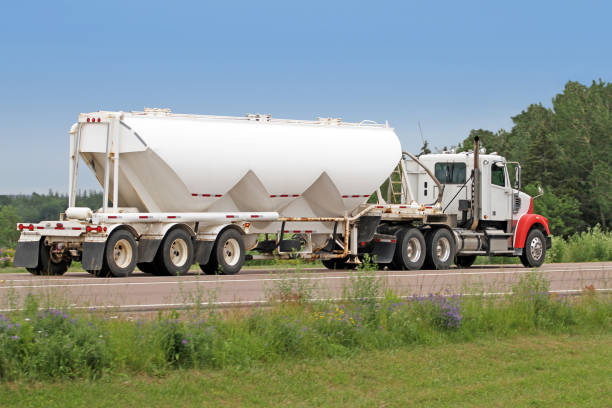
The foundation of successful Pennsylvania Quarry Logistics is the fleet. Different projects require different transport configurations to maximize payload while staying within legal weight limits. Choosing a partner with a diverse fleet ensures that the right truck is dispatched for the specific site constraints.
| Equipment Type | Avg. Payload (Tons) | Best Site Application | Logistics Value |
| Tri-Axle Dump | 16 to 18 | Residential / Utility Repair | High Maneuverability |
| Tractor-Trailer End Dump | 22 to 26 | Mass Grading / Roadwork | Maximum Capacity |
| Live Bottom Trailer | 22 to 24 | Paving / Low Clearance | Continuous Feed |
| Super Dump | 19 to 21 | Weight-Restricted Bridges | High Versatility |
By optimizing the payload, Pennsylvania Quarry Logistics providers reduce the total number of trips required, which directly lowers the fuel consumption and carbon footprint of the project.
Understanding Quarry-Specific Loading Protocols
Every quarry in Pennsylvania operates like a small, self-contained city with its own set of rules. The Pennsylvania Quarry Logistics partner you choose must be familiar with these internal protocols to avoid delays at the scales. Some quarries utilize automated load-out systems that require specific radio frequencies, while others still rely on manual ticketing and “first-come, first-served” queuing.
A hauler who is well-versed in Pennsylvania Quarry Logistics knows which quarries have the fastest “turn times.” They can advise a contractor on whether it is better to source from a slightly more expensive quarry that loads trucks in 10 minutes versus a cheaper quarry where trucks might sit in line for an hour. This insight is crucial for maintaining a high cycle rate during the workday.
The Integration of Technology in Bulk Hauling
By 2026, technology has become the primary driver of efficiency in Pennsylvania Quarry Logistics. Digital dispatching and GPS tracking have replaced the guesswork of traditional hauling. A modern logistics partner provides a digital “dashboard” where contractors can see exactly how many loads have left the quarry and their current location in transit.
Technological Advantages in Hauling
- Real-Time GPS Tracking: Know exactly when the next load will arrive to minimize crew downtime.
- Electronic Ticketing (e-Ticketing): Instant digital weight tickets that sync with project accounting.
- Route Optimization Software: Identifying the fastest paths while avoiding “posted” or weight-restricted roads.
- Geofencing: Automated alerts when a truck enters the quarry or arrives at the job site.
These tools allow for a “lean” approach to Pennsylvania Quarry Logistics, where material arrives precisely when it is needed, reducing the need for large, messy stockpiles on-site.
Safety Standards and Regulatory Compliance
Safety is the non-negotiable pillar of Pennsylvania Quarry Logistics. Pennsylvania has some of the strictest enforcement for heavy vehicles in the country, and a hauling partner with a poor safety record is a liability. You must verify that your partner maintains a high CSA (Compliance, Safety, Accountability) score and conducts regular inspections of their tarping systems and tires.
Furthermore, Pennsylvania Quarry Logistics must account for MSHA (Mine Safety and Health Administration) regulations. A partner who prioritizes these standards protects your project from regulatory shutdowns and fines.
Seasonal Fluctuations and Market Availability
The aggregate industry in the Keystone State is highly seasonal. Pennsylvania Quarry Logistics become significantly more difficult during the peak months of May through October. During this window, the demand for “hot-mix” asphalt and road base stone creates a shortage of available trucks.
Managing Seasonal Volatility
- Spring Weight Restrictions: Navigating the “thaw” period when many secondary roads are posted with lower weight limits.
- Summer Peak Demand: Pre-booking fleet capacity to ensure material flow during the busiest construction months.
- Fall Harvest Competition: Competing with agricultural haulers for the same pool of CDL drivers.
- Winter Quarry Closures: Coordinating stockpiles before quarries reduce their hours or close for maintenance during the freeze.
Pricing Models: Hourly vs. Tonnage Rates
One of the most complex aspects of Pennsylvania Quarry Logistics is the pricing structure. Depending on the project, you may be quoted an hourly rate or a per-ton rate. Each has its pros and cons depending on the “cycle time” of the haul.
- Tonnage Rates: Best for long-distance hauls where the distance is fixed. This places the risk of traffic delays on the hauling company.
- Hourly Rates: Often preferred for local “shuttle” work or when site unloading times are unpredictable. This ensures the hauler is compensated for the time their equipment is tied up.
Professional Pennsylvania Quarry Logistics providers will help you analyze the math to determine which model offers the most value. They should also provide a clear breakdown of fuel surcharges, which are standard in 2026 to account for the volatility of diesel prices.
The Role of Site Preparation in Logistics Efficiency
The efficiency of Pennsylvania Quarry Logistics does not end at the quarry gate; it depends heavily on the condition of the job site. If a truck arrives and has to wait 20 minutes for a loader to clear a path, the logistics chain is broken.
Contractors must ensure that dumping zones are level, well-marked, and free of overhead obstructions like power lines or low-hanging trees. A hauling partner who values Pennsylvania Quarry Logistics will often conduct a “site walk” before a major project begins to identify potential hazards that could slow down the trucks. This proactive communication is what separates a true logistics partner from a basic trucking company.
Navigating Tolls and Pennsylvania Turnpike Logistics
Pennsylvania is home to a vast network of tolled roads, including the PA Turnpike and various bridges crossing the Susquehanna and Delaware Rivers. Pennsylvania Quarry Logistics must account for these costs, as they can add hundreds of dollars to a daily hauling budget.
| Route Factor | Impact on Logistics | Cost Consideration |
| PA Turnpike | Faster travel times / less wear | High toll costs for Class 8 trucks |
| State Routes (Non-Toll) | Slower speeds / more signals | Higher fuel consumption and labor time |
| Bridge Restrictions | May require 10+ mile detours | Increases per-ton hauling cost |
| Urban Corridors | High risk of standby time | Requires night or off-peak delivery |
A smart Pennsylvania Quarry Logistics provider uses data to determine if the time saved by taking a tolled route offsets the cost of the toll, providing the most economical solution for the client.
Environmental Sustainability in Aggregate Transport
As environmental regulations become more stringent in 2026, Pennsylvania Quarry Logistics are shifting toward “green” initiatives. This includes the use of late-model engines with advanced exhaust treatment systems and the optimization of routes to reduce “deadhead” miles (empty trucks driving back to the quarry).
Many municipal projects now require contractors to report on the carbon footprint of their material supply chain. By hiring a partner that prioritizes modern Pennsylvania Quarry Logistics, you can provide the data needed to meet these sustainability goals. Furthermore, using “live-bottom” trailers for paving projects can reduce the amount of wasted material, which is both an environmental and financial win.
Communication: The Human Element of Logistics
Despite the rise of GPS and AI, the human element remains vital in Pennsylvania Quarry Logistics. A dedicated dispatcher who understands the specific needs of your site is worth their weight in gold. They serve as the air traffic controller for your materials, adjusting the flow of trucks in response to on-site challenges or quarry delays.
When interviewing a partner for Pennsylvania Quarry Logistics, ask about their dispatch-to-driver ratio. You want a partner where the dispatchers aren’t over-leveraged and can provide the personalized attention your project requires. High-quality communication ensures that when a problem arises, and in construction, it always does, it is solved before it becomes a project-halting crisis.
Evaluating Insurance and Liability Coverage
The risks associated with moving 80,000-pound vehicles are significant. Pennsylvania Quarry Logistics require a partner with robust insurance coverage that exceeds the minimum state requirements. This includes not only auto liability but also cargo insurance and workers’ compensation for their drivers.
A reputable Pennsylvania Quarry Logistics partner will proactively provide a Certificate of Insurance (COI) that names your company as an additional insured. This layer of protection is essential for shielding your project from the financial fallout of a roadside accident or a site-level mishap during the unloading process.
Site Volume and Inventory Management
For large-scale infrastructure work, Pennsylvania Quarry Logistics involve more than just “delivery.” They involve inventory management. If you are building a bridge or a highway, you need to know that you have enough stone on-site for tomorrow’s pour without cluttering the work zone today.
A partner that excels in Pennsylvania Quarry Logistics will help you calculate “burn rates” how fast your crew is using material, and adjust the delivery schedule accordingly. This “Just-in-Time” delivery model is the gold standard for modern construction, as it reduces the risk of material degradation and site congestion.
Choosing the Right Long-Term Logistics Partner
Ultimately, the goal of navigating Pennsylvania Quarry Logistics is to build a long-term partnership. The aggregate industry is built on trust and reliability. A partner who shows up on time, communicates clearly, and provides fair, transparent pricing becomes an extension of your own team.
When making your final selection, look for a company that has a deep history in Pennsylvania and a proven track record of serving the local construction community. By mastering Pennsylvania Quarry Logistics today, you are setting the foundation for the successful infrastructure of tomorrow.
Frequently Asked Questions (FAQs)
What is the most common cause of delays in Pennsylvania Quarry Logistics?
Traffic congestion on major interstates like I-81 and long queue times at the quarry scales are the two most common causes. Professional Pennsylvania Quarry Logistics providers mitigate this by using real-time GPS data to adjust routes and by scheduling “first-out” loads for early morning delivery.
Do hauling companies help with permitting for overweight loads?
Yes, a full-service Pennsylvania Quarry Logistics partner will handle the necessary permits for overweight or oversized loads, especially when moving large rip-rap or specialty materials that require specific state or municipal approval.
How do I know if my site can handle a full tractor-trailer?
A reputable Pennsylvania Quarry Logistics partner will often conduct a site assessment. They will look for turn radii, ground compaction, and overhead clearance. If a tractor-trailer isn’t feasible, they will recommend a fleet of tri-axle trucks to move the same volume safely.
Is e-Ticketing mandatory for all Pennsylvania projects?
While not yet mandatory for every private job, PennDOT and many municipal governments now require e-Ticketing for state-funded infrastructure projects. It is a core component of modern Pennsylvania Quarry Logistics and is becoming the industry standard for its accuracy and transparency.
Why do fuel surcharges fluctuate so often?
Fuel surcharges in Pennsylvania Quarry Logistics are typically tied to the Weekly On-Highway Diesel Prices index provided by the Energy Information Administration. This ensures that the price remains fair for both the hauler and the client as global energy markets shift.